
You have officially decided to take the leap. You understand the cost to start a homecare agency in Ohio, and you are ready to tackle the Ohio Department of Health (ODH) licensing process. But before you open your doors, you need to make a critical business decision: How will your agency get paid?
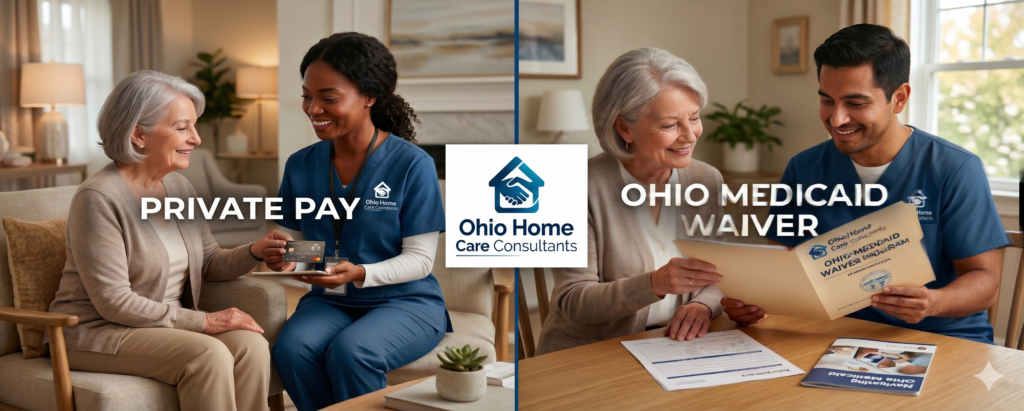
In Ohio’s non-medical homecare sector, your revenue will generally come from one of two streams: Private Pay (clients paying out-of-pocket or via long-term care insurance) or Medicaid Waivers (state-funded programs like PASSPORT or the Ohio Home Care Waiver).
Choosing the wrong model for your initial launch is a massive reason why homecare startups get stuck and run out of capital before they ever turn a profit. Let’s break down the realities of both models so you can build a sustainable agency.
The Private Pay Model: Faster Cash Flow, Higher Margins
In the Private Pay model, you bill the client or their family directly for your services. You set your own hourly rates, define your own service minimums, and control your billing cycle.
The Pros of Private Pay:
- Immediate Cash Flow: You can require a deposit upfront and bill weekly. There is no waiting on government agencies to process claims, meaning you can make payroll easily.
- Higher Profit Margins: You have the freedom to charge premium rates for premium care.
- Less Bureaucracy: While you still must maintain strict compliance with ODH regulations, you bypass the intense billing audits and secondary certifications required by Medicaid.
The Cons of Private Pay:
- Intense Marketing: Families paying out of pocket have high expectations. You will need to invest heavily in local marketing, networking with discharge planners, and building a strong brand reputation to acquire these clients.
- Smaller Client Pool: Not every family can afford ongoing out-of-pocket care, which limits your total addressable market.
The Ohio Medicaid Waiver Model: High Volume, High Red Tape
To accept Medicaid in Ohio, getting your ODH license is only the first step. You must subsequently apply to become a certified provider through the Ohio Department of Medicaid (ODM) and the Ohio Department of Aging (ODA).
The Pros of Medicaid:
- Massive Built-In Demand: There is a waiting list for subsidized homecare in Ohio. Once you are an approved provider, case managers will actively send clients to your agency. You will rarely have to spend money on marketing.
- Business Stability: When evaluating if homecare is a good business to start in 2026, the recession-proof nature of government-funded care is a huge positive factor.
The Cons of Medicaid:
- The Certification Delay: Applying for Medicaid certification can add an additional 3 to 6 months to your launch timeline after you get your ODH license.
- Fixed Billing Rates: The state dictates exactly what you can charge per hour. Margins are significantly tighter, meaning you have to rely on a high volume of clients to generate substantial profit.
- Delayed Payouts: You submit claims to the state, and it can take weeks to see that money hit your bank account. You must have enough startup capital to pay your caregivers while you wait for state reimbursements.
The Smart Strategy for Ohio Startups
For most new entrepreneurs starting a homecare agency in Ohio, we highly recommend launching as a 100% Private Pay agency first.
Starting with Private Pay allows you to build immediate cash flow, test your operational processes, and hire your first few phenomenal caregivers without the crushing weight of Medicaid audits and delayed billing. Once your business is stable and generating revenue, you can then begin the secondary application process to become a Medicaid provider, effectively creating a hybrid model.
Need Help Mapping Your Strategy?
Deciding on your revenue model impacts every single policy, procedure, and application you submit to the state. Do not leave your business structure to chance.
Whether you want to dominate the high-end private pay market or build a massive Medicaid-funded enterprise, we can guide you through the regulatory maze. Book a consultation today to build your custom Ohio homecare roadmap.